Rhinoが最新のNODE学生主導プロジェクトの要に: ノルウェーの物理的自律航行チャレンジ、Njord 2025 のために開発された自律航行船(ASV)、ASKET。NODE はオープンソースでセンサーを豊富に備え、完全に自律航行できる船を作り出すために建築、マリンロボティクス、デジタルファブリケーションを組み合わせた学際的な Institute for Advanced Architecture of Catalonia(IAAC)の学生チームです。
The Institute for Advanced Architecture of Catalonia (IAAC) in Barcelona just introduced a new edition of the Global Summer School (GSS), marking another milestone in fostering global collaboration and innovation in architecture and design.
For over 14 years, IAAC has been facilitating knowledge exchange and expertise sharing among architects, engineers, designers, and innovators worldwide. The GSS brings together students from diverse backgrounds to engage with IAAC's network of experts and renowned lecturers.
This July, IAAC introduces a new edition of GSS, offering a unique blend of onsite and online workshops. The modular workshop model aims to provide participants with hands-on experiences at IAAC Barcelona while ensuring digital accessibility through an agile online format.
GSS24 presents an exciting lineup of four workshops covering various topics, including the exploration of bamboo architecture and fabrication, advanced computation, urban analytics for participatory design, and artificial intelligence. These workshops, led by IAAC Faculty and Alumni, promise immersive workflows and individual project exploration and development.
Participants in the GSS program will have the flexibility to tailor their learning journey according to their preferences. Whether opting for a two-week onsite workshop in Barcelona at IAAC or selecting one or more online modules offered throughout July 2024, students can expect a dynamic and enriching educational experience.
One of the highlights of GSS24 is the exclusive access to Global Lectures and weekly online gatherings featuring experts from the Architecture, Engineering, and Construction (AEC) industry. These sessions complement the workshop themes and provide participants with valuable insights and perspectives.
The workshop will explore the convergence of parametric tools, digital fabrication, and prototyping within the environment of IAAC Barcelona and Valldaura Labs. It welcomes creatives from architecture, urban planning, digital fabrication, and design seeking a multidisciplinary experience in an international setting.
Dates: 1-12 July 2024 Venue: IAAC Barcelona (Spain)
During the workshop, participants will explore the convergence of advanced computational design, machine learning, and environmental analysis in architecture powered by Python. Students will unlock the potential of data-centric models and Python-based algorithms to revolutionize architectural practice, prioritizing sustainability and environmental considerations.
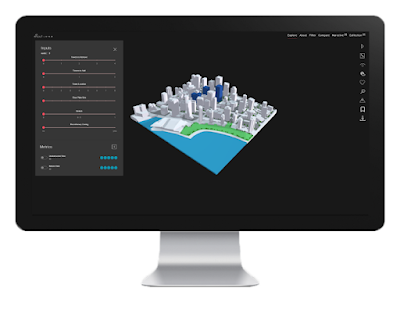
The workshop will explore the integration of public participation with digital innovation in urban design, develop urban analytics for participatory design, collect and map citizen inputs for data-driven design of public spaces, and equip students with the skills to engage communities and apply technology in co-designing inclusive urban spaces.
In the workshop, students will use cutting-edge AI tools including infrared.city for real-time microclimate simulations, multi-modal large language models, stable diffusion models, and advanced computer vision models to develop innovative design workflows for sustainable architectural solutions.
Dates: 15-19 July Venue: Online
The deadline for applications with the early bird fees is May 31st.
The Master in Advanced Computation for Architecture & Design – MaCAD is a unique online program training a new generation of architects, engineers, and designers with the skills that the Architecture, Engineering and Construction (AEC) industry demands nowadays.
The program provides expertise in applying the latest digital software for design simulation, analysis, and optimization of digital data in architecture, offering a broad and advanced theoretical and practical knowledge of computational design.
Based on a Data Driven, Learning by doing and Design by Research methodology, the master offers a unique online educational experience.
In contrast to the traditional online programs, the Master in Advanced Computation for Architecture & Design—a 60 ECTS accredited Master degree consisting of three 15 ECTS postgraduate programs—offers a real-class virtual environment based on a continuous, interactive, and collaborative learning process.
Applications are still open this summer for the next academic year (2022-23 & 2022-24).




 購読
購読

 投稿
投稿

